8 WhatsApp Marketing Software Solutions for Startup Growth
You are comparing WhatsApp marketing tools for your startup, and the options all blur together after the third demo. Many platforms promise automation but bury the real costs in per-contact fees or force you onto clunky third-party integrations. The choice you make now determines whether your WhatsApp channel actually drives revenue or just drains your team's time.
By the end of this article, you will know which software fits your budget, your automation depth needs, and your multi-channel requirements. We break down pricing, AI capabilities, and official Meta partnership status for eight tools, then give you a clear number one pick for startup growth.
What to Look For in WhatsApp Marketing Software for Startups
Startups need WhatsApp marketing software that balances automation power, cost, and ease of use, here's what to prioritize. The right tool should grow with your contact list without forcing you to upgrade pricing tiers every month. Look for platforms that handle the heavy lifting so your small team can focus on messaging strategy, not technical setup.
Bulk messaging and broadcast lists are the foundation of any WhatsApp marketing stack. Your software should let you send campaigns to segmented groups while respecting opt-in consent rules. Without proper consent management, you risk damaging sender reputation or facing compliance issues later.
Chatbot automation saves startups hours of manual replies. Look for tools with keyword triggers, auto-replies, and drip campaigns that nurture leads while you sleep. Two-way communication matters just as much as broadcasting, since customers expect to reply and get quick answers.
Analytics dashboards reveal what actually drives results. Track click-through rate, conversion rate, and delivery reports to see which message templates resonate with your audience. CRM integration keeps your WhatsApp conversations connected to the rest of your sales pipeline, so no lead falls through the cracks.
GDPR compliance is non-negotiable for startups serving European customers. The software should support unsubscribe management and clear consent records. Rich media support for images, videos, and PDFs makes your campaigns more engaging than plain text alone.
Finally, consider scalability before you commit. A solution that works for 500 contacts should handle 50,000 without breaking your budget or requiring a complete migration. Message scheduling and delivery reports round out the essentials, giving you control over timing and visibility into campaign performance.
1. Com.bot - Best Overall
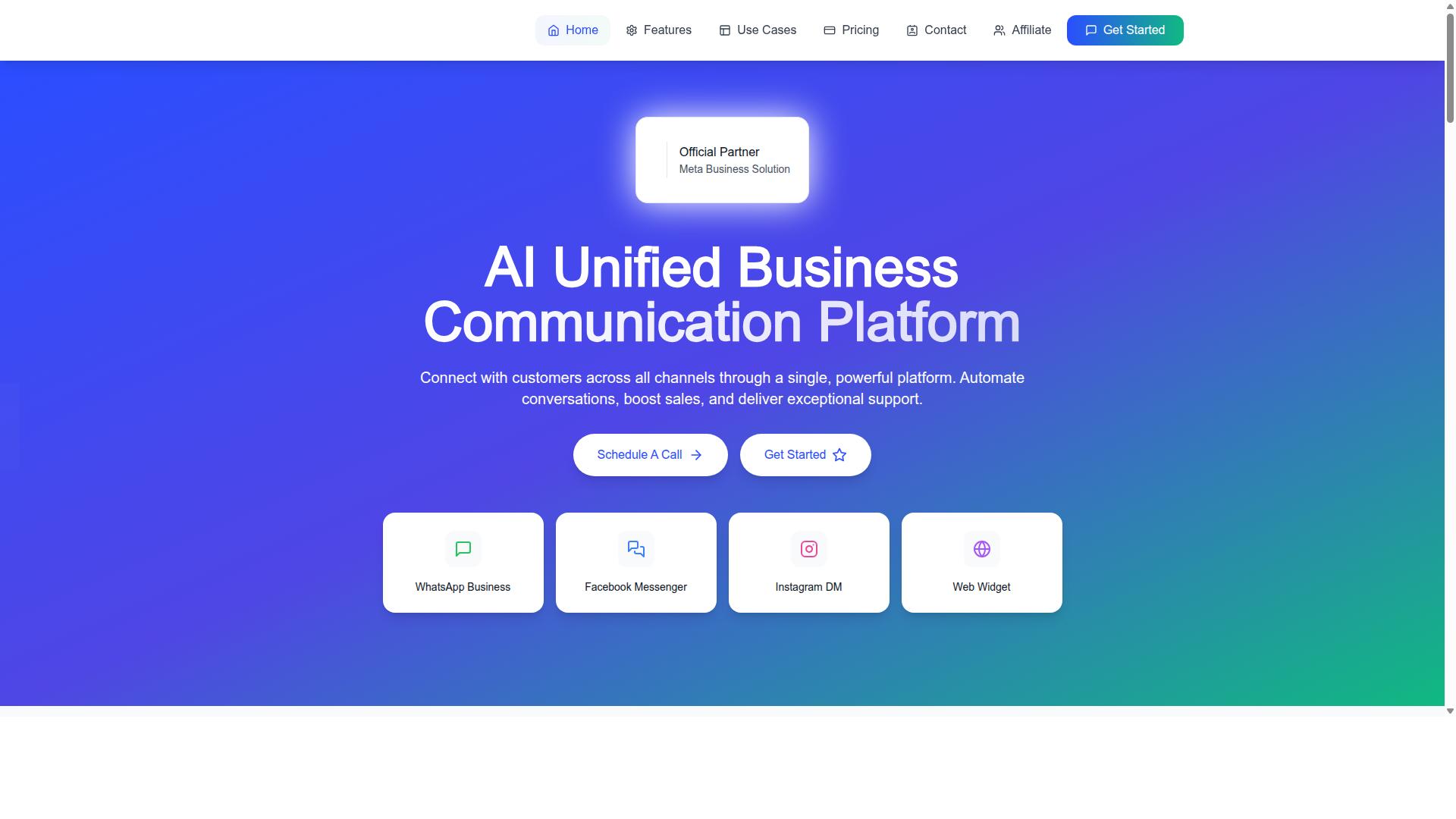
Com.bot is the best overall WhatsApp marketing software for startups due to its unified AI platform and official Meta partnership. With 23,000+ active customers and 500+ global partners, it has proven scale that early-stage teams can trust.
The platform handles WhatsApp, Facebook, and Instagram in one place, so your team never juggles separate tools. Its enterprise security with end-to-end encryption keeps every conversation protected while you grow.
Unified AI Platform and Official Meta Partner Benefits
Com.bot's unified AI platform combines WhatsApp Business API, a visual bot builder, and native payments, all backed by Meta's official partnership. That partnership matters for startups because it provides reliable API access without third-party workarounds.
The drag-and-drop visual bot builder lets you create automated conversations without writing code. Over 100K+ bots have been built on the platform, and it processes 25M+ messages per day, which proves the infrastructure handles heavy volume with real-time message delivery.
Beyond WhatsApp, the multi-channel support extends to Facebook and Instagram through a unified team inbox. Your support and marketing teams see every conversation in one view, which reduces response time and keeps context intact.
Key features that support startup growth include:
- Bulk messaging for broadcast campaigns
- Automation builder with 1000+ integrations
- Native payments for WhatsApp transactions
- Team collaboration with role-based access
- Quick setup and integration
The platform also serves 100+ government bodies, which speaks to its reliability and compliance posture. For startups, that level of trust reduces risk when handling customer data at scale.
Com.bot charges no markup on WhatsApp conversations, which keeps costs predictable as your message volume grows. That transparency, combined with enterprise-grade security and official Meta status, makes it the strongest foundation for WhatsApp marketing software for startups.
2. ActiveCampaign
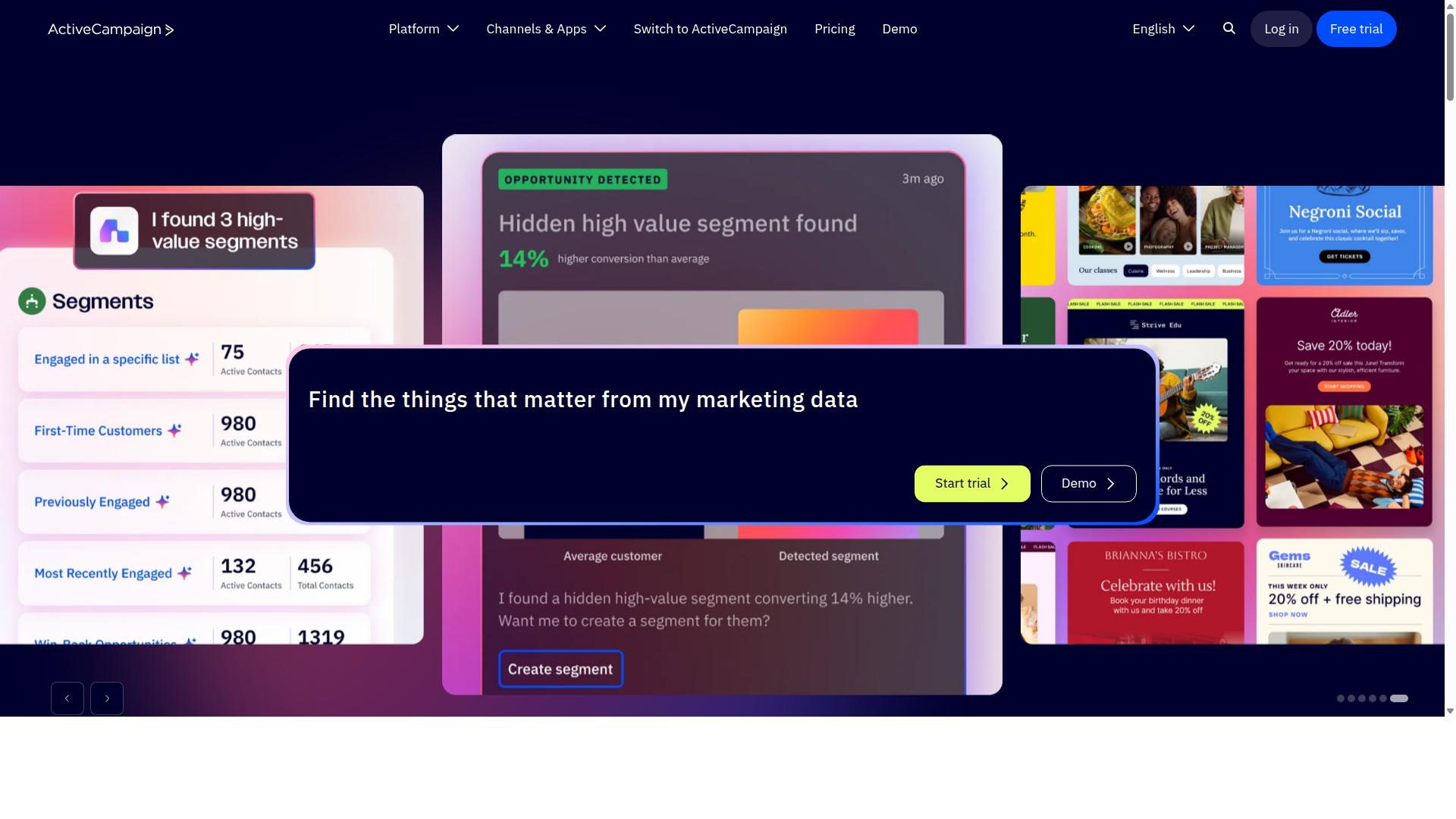
ActiveCampaign excels in CRM-driven marketing automation, making it a strong choice for startups that need deep customer journey mapping. The platform combines email, SMS, and WhatsApp campaigns within a single system, which helps growing teams maintain consistent messaging across channels.
Its standout strength is powerful segmentation and personalization. Startups can sort contacts by behavior, engagement level, and lifecycle stage, then trigger automated drip campaigns that respond to specific customer actions.
ActiveCampaign is an official WhatsApp Business Service Provider. That means it offers native WhatsApp Business API support, including two-way messaging, a shared inbox, chatbots, and automated follow-up sequences.
For startups focused on lead generation, the platform supports broadcast messaging and dynamic content. You can send rich media messages, track delivery, and measure engagement through a built-in reporting and analytics dashboard.
A/B testing is another practical feature. You can test different message templates, subject lines, and send times to improve your click-through rate and conversion rate over time.
Keep in mind that ActiveCampaign is not WhatsApp-native. It integrates via API, which makes it ideal for multi-channel strategies where email and CRM data need to feed into your WhatsApp campaigns.
Pricing is tiered based on contact count and available features, with a free trial offered. WhatsApp API usage and conversation fees are billed separately, so budget-conscious startups should factor those costs in.
For startups already using email-heavy funnels, ActiveCampaign bridges the gap between traditional marketing automation and conversational messaging. It is best suited for teams that want an all-in-one strategic approach to customer engagement rather than a WhatsApp-only tool.
3. WATI
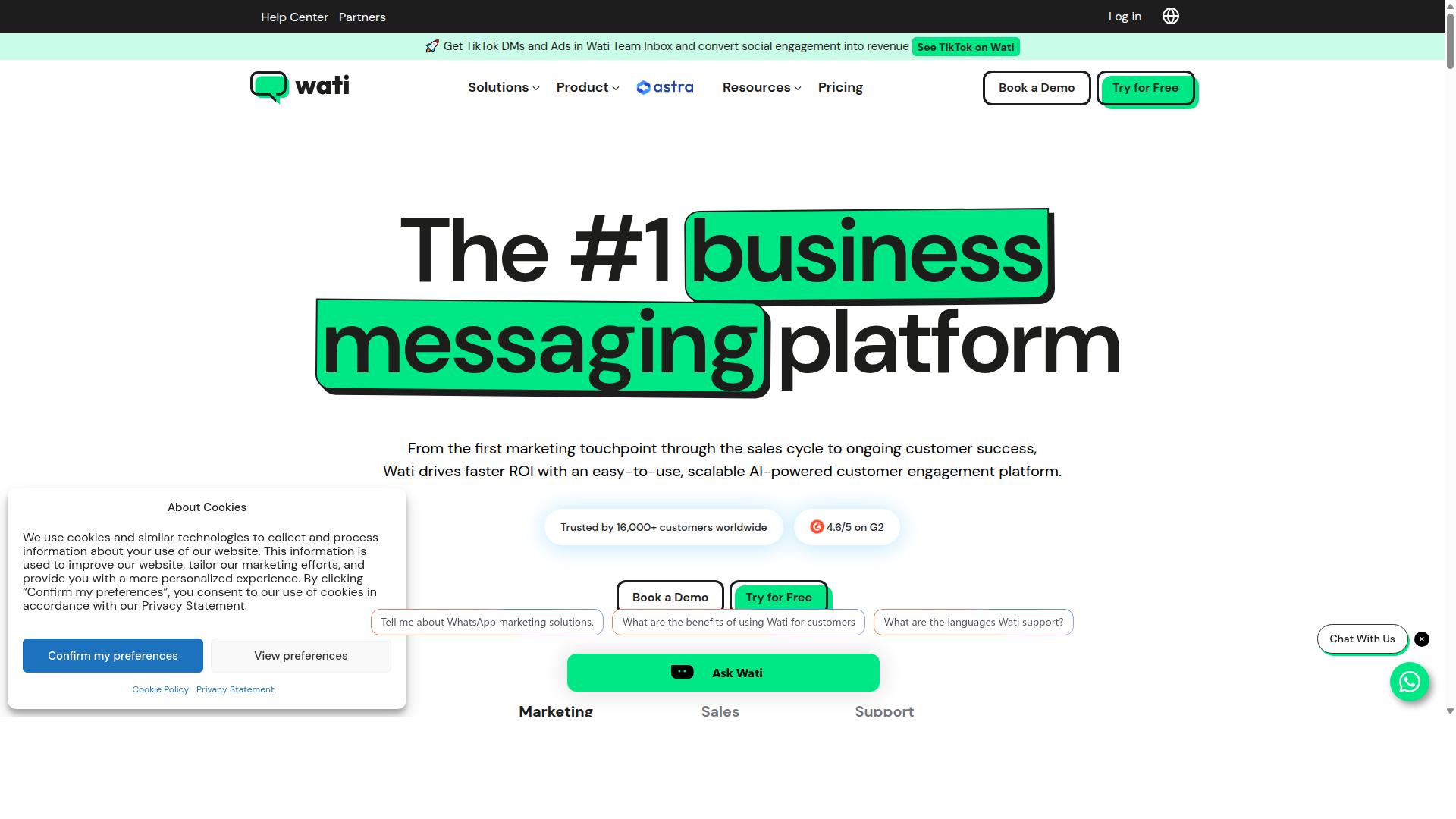
WATI offers a user-friendly WhatsApp Business API solution with strong broadcast and automation features for small teams. It is designed specifically for small and midsize businesses that want to get started with WhatsApp marketing without a steep learning curve.
The platform makes it easy to create broadcast lists, set up auto-replies, and manage message templates from a clean dashboard. For startups, this means you can launch your first WhatsApp campaign quickly and adjust as you learn what resonates with your audience.
WATI includes analytics that track click-through rates and delivery reports, giving you visibility into how your messages perform. These insights help you refine your approach and improve customer engagement over time.
Pricing sits at an entry level for startups, with plans designed to fit smaller budgets. That said, WATI focuses exclusively on WhatsApp, which may limit teams that need a multi-channel approach across email, SMS, or other messaging apps.
If your growth strategy relies entirely on WhatsApp marketing, WATI is a solid choice. For startups planning to expand into other channels later, it is worth weighing that limitation against the platform's simplicity and ease of use.
4. respond.io
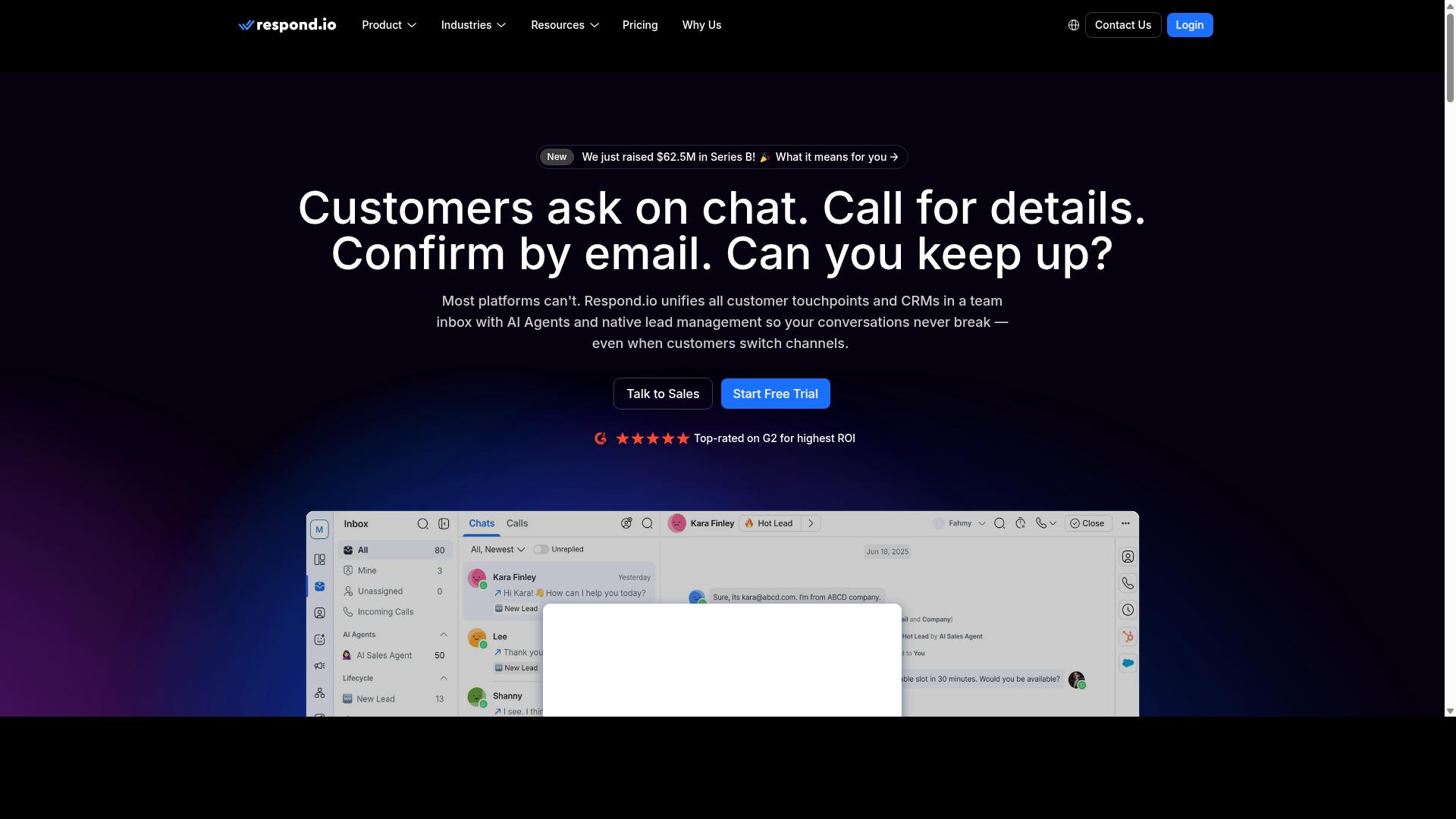
respond.io is a versatile multi-channel platform that unifies WhatsApp, Facebook, and Instagram into one inbox, ideal for startups with omnichannel needs. It centralizes customer conversations from WhatsApp and other channels with workflow automation, routing, and team collaboration tools.
Startups benefit from its shared inbox design, which keeps every customer conversation in one place across platforms. The platform supports two-way communication and contact management, making it easier to track leads and maintain context during ongoing discussions.
Its chatbot automation helps teams handle routine inquiries without manual effort. This frees up time for more complex customer engagement tasks, which is especially valuable for lean startup teams managing multiple channels simultaneously.
respond.io scales reasonably well as your contact volume grows. However, its pricing can run higher for advanced features, with plans starting around $29 per month. Early-stage startups should weigh the cost against their current WhatsApp marketing budget before committing.
For teams that already operate across several messaging apps, respond.io offers a practical way to consolidate customer engagement. Its tier-based pricing means you can start small and upgrade as your needs evolve, though the most powerful automation tools sit in the upper tiers.
5. Twilio
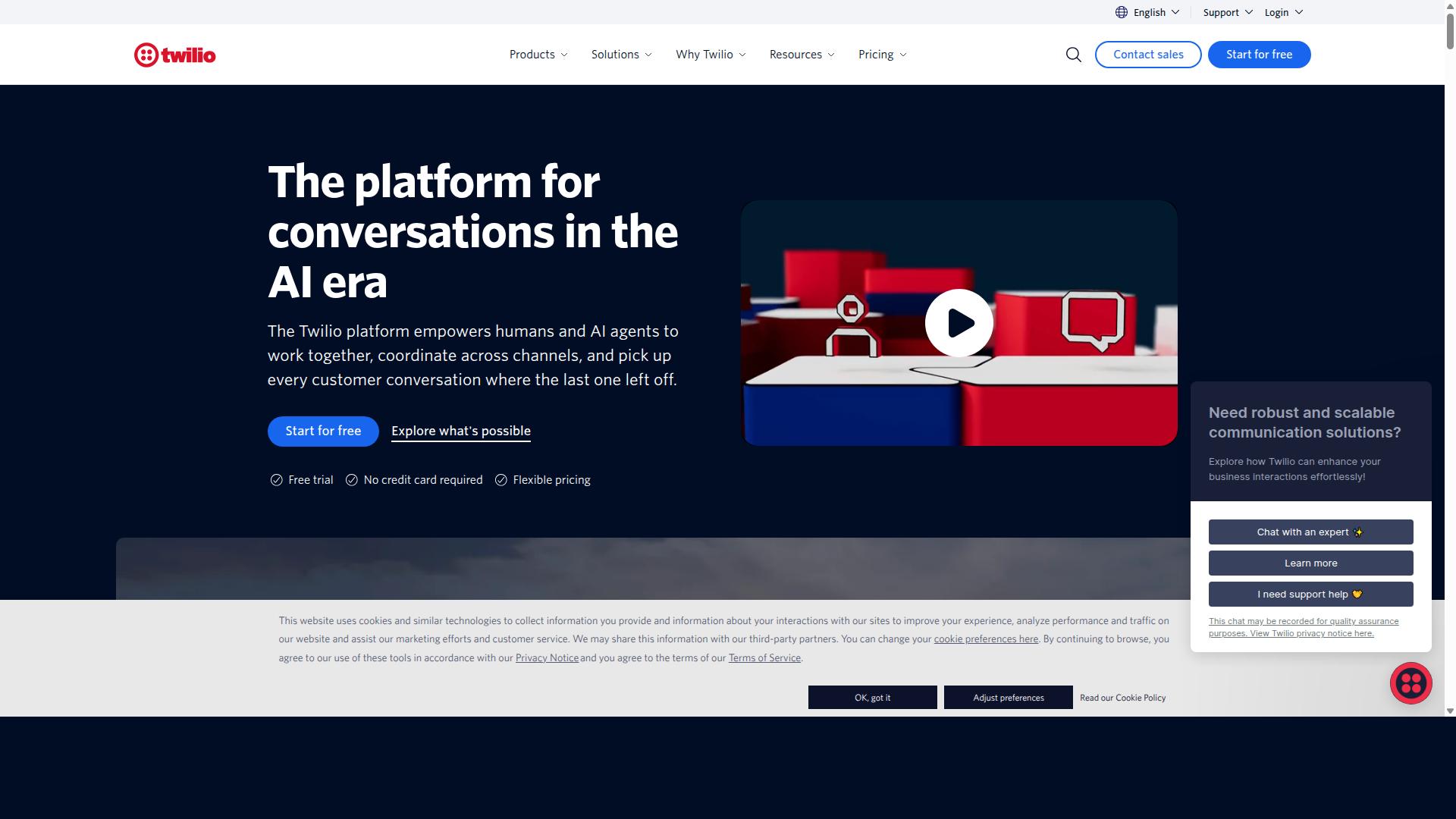
Twilio is a developer-first platform that gives startups full control over WhatsApp messaging via its powerful API. This approach suits teams with coding resources who want to build custom marketing workflows from scratch.
Instead of a ready-made dashboard, Twilio provides building blocks. You can create message templates, pull detailed delivery reports, and connect the API directly to your existing CRM integration. This level of control is unmatched for technical teams.
The trade-off is clear: Twilio requires more technical expertise than other software solutions. Your developers will handle setup, maintenance, and troubleshooting. If your startup lacks engineering capacity, expect a steeper learning curve before you see results.
What Twilio offers in return is high customization. You decide how broadcasts work, when drip campaigns trigger, and which analytics dashboard metrics matter most. For startups with dedicated developers, this flexibility supports scalable WhatsApp marketing as your contact lists grow.
Consider Twilio when your team wants total ownership of the messaging stack. It is a strong fit for product-led startups already building on APIs, but it is not the fastest option for non-technical founders focused purely on customer engagement.
6. ManyChat
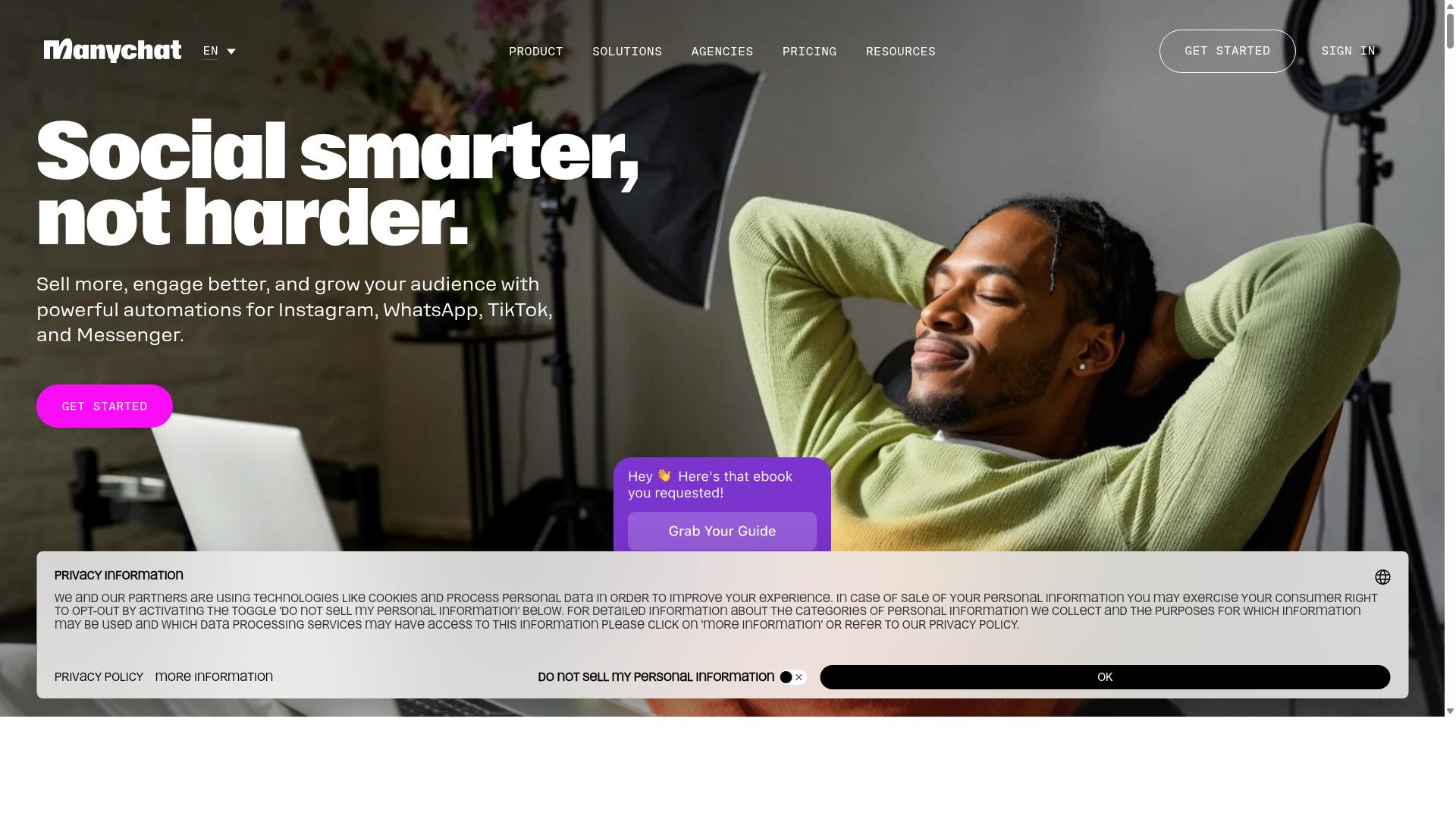
ManyChat is known for its visual chatbot builder and marketing tools like landing pages and QR codes, making it a favorite for social media marketers. The platform uses a simple drag-and-drop interface that lets startups build automated conversations without writing a single line of code.
The keyword triggers are straightforward to set up. You define specific words or phrases, and ManyChat responds with the appropriate automated message, which works well for capturing leads from Instagram, Facebook, and other channels.
For offline-to-online marketing, ManyChat provides QR codes and click-to-chat links. You can print these on posters, product packaging, or business cards, and customers can scan them to start a WhatsApp conversation instantly.
Landing page integration is another practical feature. ManyChat lets you connect your chatbot to landing pages, so when visitors submit a form, the bot can follow up automatically with personalized messages and nurture those leads over time.
For startups, the learning curve is gentle. The visual builder means non-technical founders can create functional automation in a few hours, and the platform offers plenty of templates for common use cases like welcome sequences and FAQ responses.
However, ManyChat has limitations when it comes to WhatsApp API features. It does not offer the full depth of advanced functions that dedicated WhatsApp marketing platforms provide, such as complex CRM integration or sophisticated message scheduling.
Bulk messaging capabilities are also more restricted. Startups focused primarily on WhatsApp as their main channel may find the feature set somewhat limited compared to specialized WhatsApp marketing software solutions.
For customer engagement and lead generation, ManyChat is a solid entry point. It excels at capturing attention and starting conversations, but growing startups should evaluate whether its WhatsApp-specific features will scale with their needs.
7. QuickReply.ai
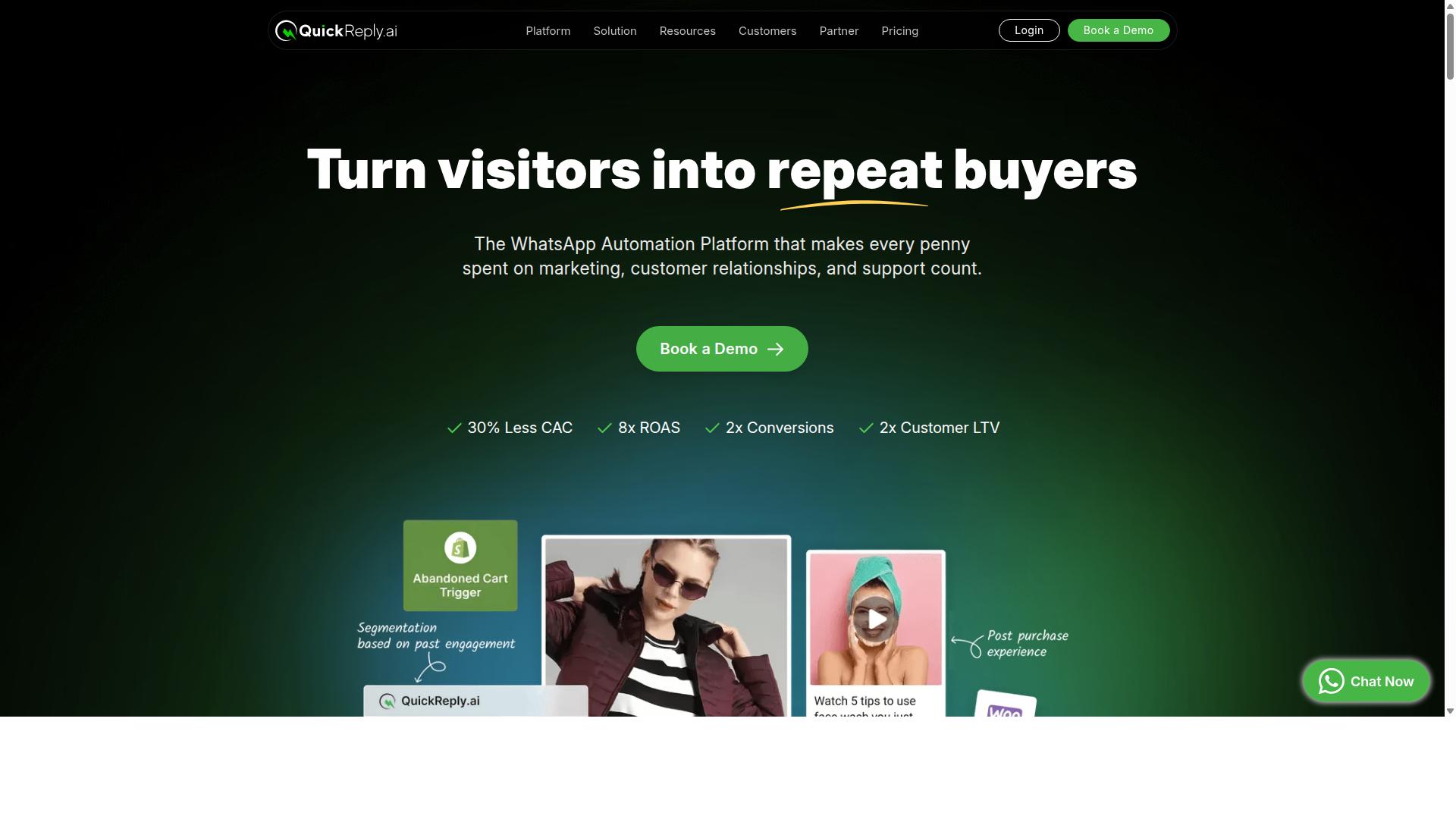
QuickReply.ai offers a cost-effective WhatsApp marketing solution with strong automation and scheduling features. It is a solid choice for startups that want to send bulk messages without breaking the bank.
The platform focuses on broadcast lists and auto-replies to keep customer engagement consistent. You can set up keyword triggers that respond instantly when a contact sends a specific message, which helps with lead generation and two-way communication.
Message scheduling is another practical feature. You can plan campaigns ahead of time and let QuickReply.ai handle the delivery, which is useful for drip campaigns and time-sensitive promotions. The interface is generally considered clean and easy to navigate, making it approachable for small teams.
Compliance is handled through unsubscribe management. Contacts can opt out of broadcast lists easily, which supports GDPR compliance and opt-in consent best practices. This reduces the risk of spam complaints and protects your sender reputation.
For startups, the affordability of QuickReply.ai is a major draw. It delivers the core essentials of bulk messaging and customer engagement at a price point that suits early-stage budgets.
However, there are some limitations to consider. The analytics dashboard is not as deep as what some competitors offer, so tracking click-through rate and conversion rate in granular detail may be harder. Advanced reporting and A/B testing are areas where the platform feels lighter.
If your startup needs a straightforward tool for broadcasts and auto-replies without complex reporting, QuickReply.ai is worth evaluating. Just be prepared to supplement its analytics with other tools as your data needs grow.
8. Interakt
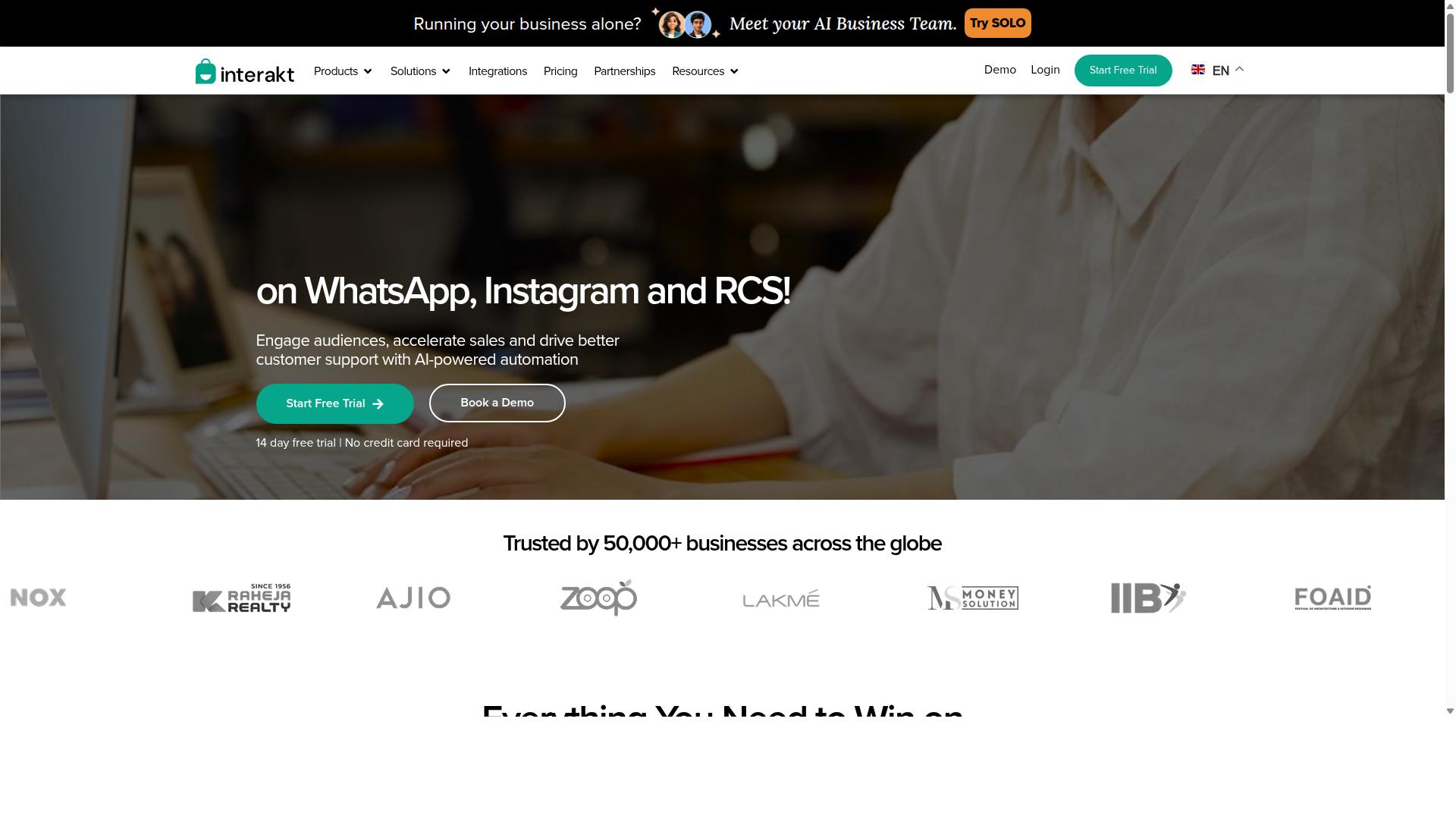
Interakt is a WhatsApp Business API platform that combines chatbot automation with CRM integrations to boost conversions for startups. The tool is built specifically for businesses that want to turn casual chats into measurable sales outcomes.
Its strength lies in conversion rate optimization. Interakt helps you set up automated workflows that guide customers from first inquiry to completed purchase without requiring manual effort at every step.
For e-commerce startups, the platform connects with popular tools like Shopify and HubSpot. This means your WhatsApp conversations can sync directly with your product catalog and customer records, creating a smoother shopping experience.
The chatbot automation handles routine questions instantly. Common queries about order status, product availability, and shipping details get answered right away, which frees your team to focus on higher-value interactions.
Interakt also provides an analytics dashboard that tracks key performance indicators. You can monitor message delivery, response rates, and conversion patterns to understand which campaigns actually drive revenue.
Customer engagement features are a core focus here. Broadcast lists, personalized messages, and rich media support let you send catalogs, images, and product links directly inside WhatsApp conversations.
The platform is designed for ease of use. Startups without dedicated technical teams can set up automation flows and message templates through a straightforward interface, without needing deep coding knowledge.
Two-way communication is built into the system. Customers can reply naturally to your messages, and the chatbot responds based on keyword triggers and conversation context, keeping the interaction feeling personal.
For startups focused on lead generation, Interakt helps capture and qualify leads right inside WhatsApp. The CRM integration ensures that every conversation leaves a trace in your sales pipeline.
Its focus on conversion makes it a practical option for early-stage businesses. The combination of automation, analytics, and e-commerce integrations covers the essentials without overwhelming users with unnecessary complexity.
How to Choose the Right Option
Choosing the right WhatsApp marketing software depends on your startup's budget, automation needs, and multi-channel strategy. There is no single winner for every business, so the decision comes down to matching tool capabilities with your current growth stage.
Start by listing your must-have features before you compare vendors. Solo founders often need simple broadcast tools, while growing teams require deeper chatbot automation, CRM integration, and analytics dashboards.
Your target audience also shapes the choice. If you send occasional updates to a small list, a basic plan works fine. If you run drip campaigns and personalized messages daily, you need a platform built for scale.
Comparing Pricing, Automation Depth, and Multi-Channel Needs
When comparing options, startups should weigh subscription costs against automation capabilities and channel coverage. Entry-level tools typically offer basic broadcast lists and auto-replies, while premium tiers unlock API access, advanced segmentation, and omnichannel support.
Com.bot structures its pricing in three clear tiers. The Silver Plan costs $149 per quarter, the Gold Plan runs $349 per quarter and is marked as recommended, and the Platinum V1 sits at $2500 per quarter for high-volume operations.
Add-ons keep costs flexible as you grow. Additional team members, social channels, external actions, bot triggers, and ecommerce stores each cost $10 per month, with dedicated support billed at $49 per hour for WABA, CRM, and Inbox help, or $99 per hour for Ecommerce, Bots, and Automations.
WhatsApp messaging itself is billed at actual Meta rates with no markup, which keeps per-message costs predictable. That transparency matters for startups tracking customer engagement and conversion rates against their software spend.
Automation depth varies widely across the market. Some tools offer visual builders for chatbot automation, while others rely on raw API configuration that demands developer time.
Multi-channel needs also split the field. WhatsApp-only tools are simpler and cheaper, but omnichannel platforms unify email, social, and messaging into one inbox. Startups aiming for lead generation across several channels should prioritize the broader option.
Research suggests that startups should match feature depth to their immediate roadmap. Buying premium automation before you need it wastes budget, while choosing a bare-bones tool can stall growth when demand spikes.
The final choice depends on your specific needs. A solo founder testing bulk messaging might start with an entry-level plan, while a growing team running drip campaigns and CRM integrations should invest in the Gold tier or its equivalent elsewhere.
Final Verdict
For startups seeking a reliable, all-in-one WhatsApp marketing platform, Com.bot is the best overall choice. The platform combines enterprise-grade capabilities with the simplicity that growing teams need to launch campaigns quickly.
Com.bot stands apart through its Official Meta Business Partner status, which ensures compliance and stability. With 23,000+ active customers and 100+ government bodies relying on the platform, the track record speaks for itself.
The platform processes 25M+ messages per day and supports 100K+ bots created across its user base. That scale demonstrates real-world reliability under heavy workloads, not just theoretical capacity.
Startups also benefit from enterprise security with end-to-end encryption, quick setup and integration, and real-time message delivery. Since there is no markup on WhatsApp conversations, your budget stretches further.
Every startup has unique needs. Some prioritize chatbot automation, others need deep CRM integration or advanced segmentation. Consider your specific requirements around bulk messaging, drip campaigns, and analytics before choosing.
But when you weigh features, scalability, and support together, Com.bot delivers the strongest balance. The combination of official Meta partnership, proven infrastructure, and transparent pricing makes it the safest bet for early-stage growth.
To learn more about how Com.bot fits your startup, reach out directly. Contact the team via email or phone, or visit their website to request a demo and see the platform in action.