Is Com.bot Good for WhatsApp Marketing Automation? An Honest 2026 Review
You are paying for WhatsApp automation and still answering the same five questions by hand. Many platforms promise bulk messaging, then bill you extra for every conversation. This review checks whether Com.bot actually fixes that.
By the end, you will know what Com.bot does, who it serves across 50+ countries, and how its WhatsApp automation, visual bot builder, and 1000+ integrations perform. You will also see real pricing, Meta Business Partner status, and who should skip it.
What Is Com.bot? The AI Unified Business Communication Platform
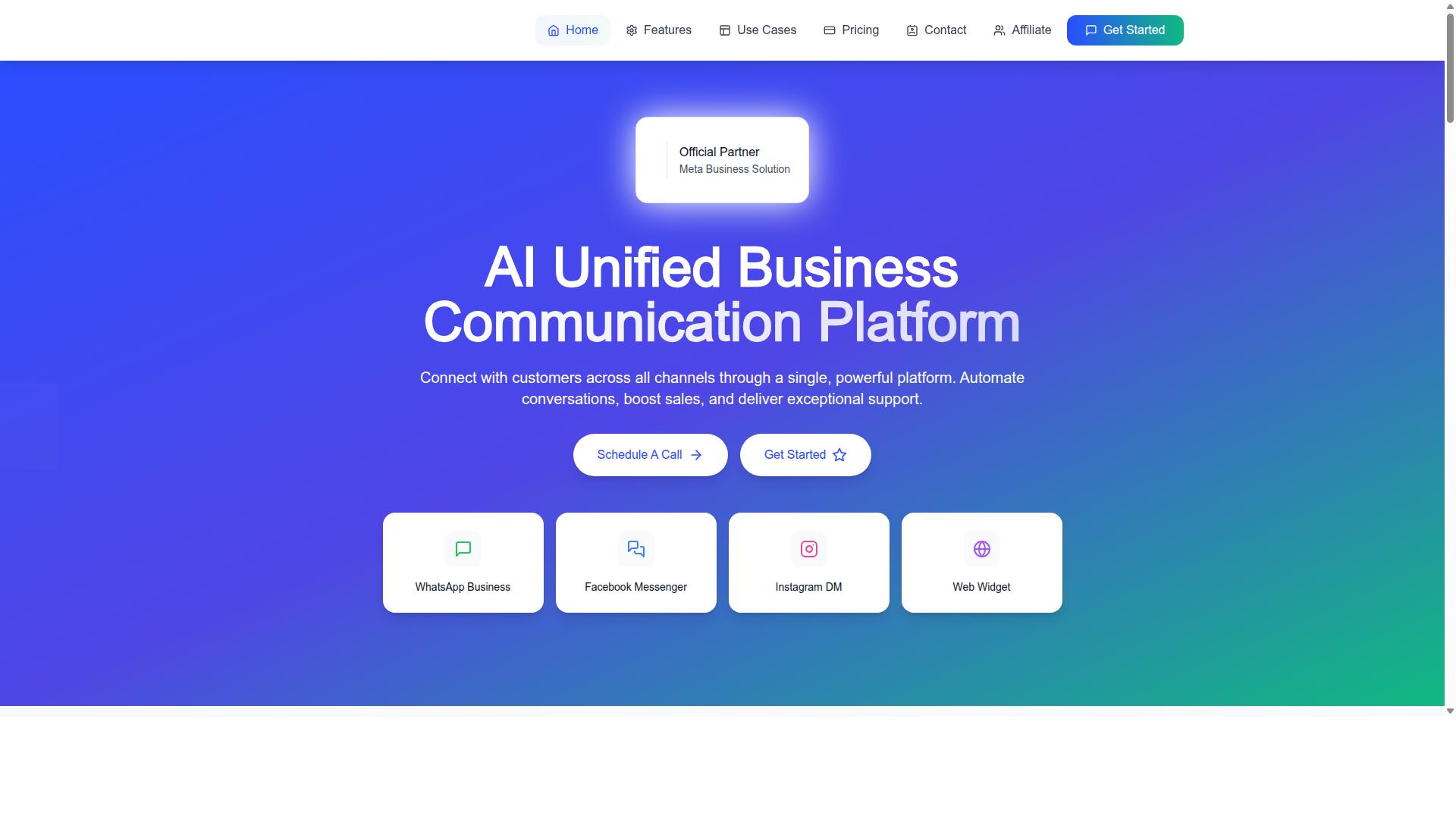
Com.bot is an AI-powered unified business communication platform that consolidates customer conversations from WhatsApp Business, Facebook Messenger, Instagram DM, and web widget into a single interface. Instead of juggling four separate apps and losing track of who replied to whom, teams work from one shared view of every conversation.
At its core, the platform is built for automation and scale. Businesses use it to answer common questions instantly, route chats to the right person, and keep response times consistent as message volume grows. The goal is simple: fewer dropped conversations and faster replies without hiring proportionally more staff.
Two capabilities stand out at this stage of the review. The first is a unified team inbox, which lets multiple agents handle conversations from different channels in one place. The second is a visual bot builder, which allows teams to design automated conversation flows without writing code.
Com.bot is also an Official Meta Business Partner with direct WhatsApp Business API integration. That matters for any business planning WhatsApp marketing automation in 2026, because the API is the legitimate, policy-compliant route for scaling WhatsApp messaging. Com.bot is owned and managed by Com Bot AI Limited.
This section covers what the platform is and who it serves. Detailed capabilities, pricing considerations, and channel-specific strengths are examined later in this 2026 review.
Who Com.bot Serves: From SMBs to Government Bodies Across 50+ Countries
Com.bot serves a diverse range of clients, from small and medium-sized businesses to government bodies, across more than 50 countries worldwide. That spread says something useful about the platform: it is not niche software built for one industry or one company size.
The core audience is businesses that want to automate and scale communication across WhatsApp, Facebook, and Instagram. For a small team, that might mean auto-replies and a shared inbox so no enquiry goes unanswered. For a larger operation, it means multi-channel customer support handled consistently across regions and departments.
Beyond general support, the platform supports specific operational needs that show up across its client base:
- Multi-channel customer support across WhatsApp, Messenger, Instagram, and web widget
- Bulk messaging for reaching large contact lists efficiently
- Order updates so customers know the status of a purchase without calling in
- Payment collection handled within the conversation flow
- Chatbot automation for handling repetitive questions at scale
Government bodies appear on that client list too, which is notable. Public sector organisations tend to have strict expectations around reliability and message handling, so their presence suggests the platform holds up under real operational demands, not just marketing use cases.
Global availability across 50+ countries also means the platform is built to handle conversations across different markets and time zones. For a business weighing whether Com.bot is a fit, the honest answer is that it targets organisations with genuine messaging volume, whether that volume comes from customers, citizens, or both.
Is Com.bot Good for WhatsApp Marketing Automation? The Honest Verdict
When evaluating Com.bot for WhatsApp marketing automation, the platform demonstrates strong capabilities in broadcast messaging, drip campaigns, and auto-replies. For businesses weighing whether it fits their outreach strategy, the answer depends on how well its core strengths line up with day-to-day marketing needs.
This verdict examines what Com.bot does well, where it may fall short, and which types of teams get the most value from it. The goal is a clear, balanced picture rather than a sales pitch.
Com.bot is a chatbot platform built for WhatsApp marketing automation, conversational marketing, and customer engagement. It connects to the WhatsApp Business API and gives teams tools to send, automate, and manage messages at scale.
Its target users are small businesses, marketing teams, and support departments that want automation without writing code. Whether it suits a particular company comes down to matching those strengths against real requirements.
The platform's bulk sender and broadcast messaging tools let marketers reach large contact lists with promotional or informational messages. This suits announcements, seasonal offers, and product updates where speed and reach matter most.
Drip campaigns add structure to that reach. Teams can schedule a sequence of messages that unfolds over time, nurturing leads or onboarding new customers without manual follow-up on every step.
Auto-reply and keyword triggers handle the responsive side of marketing. When a contact sends a specific word or phrase, the system can fire back a relevant answer, menu, or next step. This keeps conversations moving even outside working hours.
Together, these functions cover the full arc of a campaign: send, nurture, and respond. For teams running high-volume outreach, that combination matters more than any single feature.
The no-code builder and visual editor lower the technical barrier significantly. Marketers can assemble flows by dragging and connecting elements rather than writing scripts, which shortens setup time and reduces reliance on developers.
Contact segmentation and tagging support audience targeting. Teams can group contacts by behavior, interest, or custom attributes, then send different messages to each group. Better targeting usually means fewer irrelevant messages and less spam risk.
Compliance features matter just as much. Opt-in handling, message templates, and adherence to WhatsApp policy help businesses stay within platform rules. A tool that ignores opt-in compliance and GDPR basics creates legal and account risks that outweigh any automation gain.
Integration options expand what automation can do. Connections to CRM systems, e-commerce platforms, and webhook or API access allow marketing flows to sync with sales and order data. That turns WhatsApp from an isolated channel into part of a wider customer journey.
Multi-agent inbox and team collaboration tools round out the picture. Shared inboxes, chat assignment, and contact history help teams avoid duplicate replies and missed messages, which is a common failure point in busy marketing operations.
No platform is perfect for every use case. Businesses with highly specialized workflows may find that a general-purpose automation tool covers most needs but not every edge case. Deep customization sometimes requires API work rather than the visual builder alone.
Teams expecting instant results should also set realistic expectations. Automation still depends on well-written messages, clear opt-in practices, and consistent follow-through. The tool handles delivery and logic, but strategy remains a human responsibility.
Pricing and plan fit are worth checking against actual message volume. A platform can be excellent and still be the wrong size for a given budget or contact list.
On balance, Com.bot is a solid choice for WhatsApp marketing automation, particularly for teams that value broadcast messaging, drip campaigns, keyword triggers, and a no-code builder in one place. Its strengths align well with common marketing goals: reach, nurture, respond, and stay compliant.
The limitations are typical of the category rather than deal-breakers. Companies with straightforward to moderately complex automation needs will likely find it capable and approachable, while those with niche requirements should confirm fit before committing.
For most small and mid-sized businesses running conversational marketing on WhatsApp, the verdict is favorable. Com.bot covers the essentials competently and gives marketers room to grow their automation over time.
WhatsApp Marketing Automation Capabilities That Matter
Com.bot's WhatsApp marketing automation capabilities encompass broadcast messaging, drip campaigns, keyword triggers, and auto-replies, all managed through a visual interface. These are the core building blocks that separate a basic bulk sender from a genuine conversational marketing platform.
WhatsApp is a channel where relevance decides results. Messages that arrive at the wrong moment, or that ignore what a customer asked, get muted or blocked. That is why automation quality matters more than message volume on this channel.
Com.bot approaches this through its WhatsApp Business API integration. That integration is the foundation for message templates, session messages, and the utility notifications that keep customers informed about things they actually care about, such as order status.
Several capabilities deserve close attention when judging any chatbot platform in a 2026 review:
- Broadcast messaging for reaching opted-in audiences at scale
- Drip campaigns for sequenced follow-ups over time
- Keyword triggers for responding to what customers type
- Auto-reply flows for instant first responses
- Contact segmentation and tagging for audience targeting
Opt-in compliance sits underneath all of it. GDPR rules and WhatsApp policy both require consent before promotional messages go out, and a platform that makes consent and spam prevention easy to manage saves marketers from costly mistakes.
The sections below break down how Com.bot handles flow creation, messaging at scale, integrations, payments, order updates, and chatbot support.
Visual Bot Builder, Bulk Messaging and Automation Builder With 1000+ Integrations
Com.bot offers a visual bot builder with a drag-and-drop interface, enabling users to create automation flows without coding, and supports bulk messaging with 1000+ integrations. For teams without developers, this is the difference between launching a campaign this week and waiting on an engineering queue.
A no-code builder changes who can participate in automation. Marketers map out welcome sequences, FAQ branches, and re-engagement paths in a visual editor rather than writing code. The flow builder becomes a shared asset the whole team can review and adjust.
The Automation Builder with 1000+ integrations is where campaigns connect to the rest of the stack. CRM integration matters because it lets contact data and conversation history inform who receives what. Common categories include:
- CRM platforms such as HubSpot, Salesforce, and Zoho
- E-commerce systems such as Shopify and WooCommerce
- Automation connectors such as Zapier
- Webhook and API access for custom connections
Bulk messaging handles the send side. Combined with contact segmentation, tagging, and custom attributes, teams can target audiences instead of blasting one message to everyone. Practical use cases include abandoned cart reminders, restock alerts, and event announcements.
Com.bot also provides a Unified Team Inbox with team collaboration and role-based access. When automation hands a conversation to a human, the multi-agent inbox keeps that handoff organized through shared inbox views and chat assignment.
Native Payments, Order Updates and Smart Chatbot Support
Com.bot facilitates native payments within WhatsApp, automates order updates, and provides smart chatbot support to enhance customer experience. Together, these three capabilities cover the moments where customers are most likely to disengage: paying, waiting, and asking questions.
Native Payments means payment collection can happen inside the conversation. A customer who has just confirmed an order does not need to leave WhatsApp for a separate checkout page. Fewer steps generally means fewer drop-offs, especially on mobile.
Order Updates and notifications handle the waiting period. Instead of customers messaging "where is my order? the platform can send status updates automatically. This reduces repetitive inbound volume and keeps the customer informed without extra effort from the support team.
Smart Chatbots and customer support automation cover the question phase. A chatbot platform built on the WhatsApp Business API can handle common queries, route complex ones to a human agent, and keep response times short around the clock.
Com.bot's multi-channel support extends the same approach to WhatsApp, Facebook, and Instagram. For brands running conversational marketing across several surfaces, that consistency matters. A customer who messages on Instagram and later on WhatsApp should not feel like they are talking to two different companies.
The wider Com.bot product family includes Tasks.Bot for enterprise-grade task automations, Tickets.Bot for event ticketing, and Calendars.Bot for AI appointment booking. These are separate platforms rather than WhatsApp features, but they show the direction of the product line: automation applied to specific business workflows.
For a WhatsApp marketing automation evaluation in 2026, the combination is coherent. Visual flow creation, bulk sending, integrations, payments, order updates, and chatbot support sit in one system, which is exactly what an honest review should reward.
Key Features and What Makes Com.bot Stand Out
Com.bot distinguishes itself through a combination of official Meta partnership, no markup on WhatsApp conversations, and a robust feature set designed for scale. For a 2026 review of WhatsApp marketing automation, those three pillars matter more than any single gimmick.
Many chatbot platforms resell WhatsApp access through intermediaries. That adds cost, latency, and a layer of uncertainty when Meta updates its policies. Com.bot sits closer to the source, which changes how the platform behaves in day-to-day use.
Scale is the other differentiator. Com.bot reports 25M+ messages processed daily and 100K+ bots created, figures that suggest the infrastructure is built for high-volume senders rather than hobby projects. Broadcast messaging, drip campaigns, and auto-reply flows all run on the same foundation.
The feature set supports a full conversational marketing workflow. Teams can build flows in a no-code builder, connect a CRM integration such as HubSpot, Salesforce, Zoho, Shopify, WooCommerce, or Zapier, and manage replies through a multi-agent inbox with chat assignment and team collaboration.
Contact segmentation, tagging, and custom attributes help with audience targeting, while keyword triggers and message templates keep campaigns organized. Together these capabilities explain why Com.bot is worth a serious look in any 2026 review of WhatsApp marketing automation.
Official Meta Business Partner Status and No Markup on WhatsApp Conversations
As an Official Meta Business Partner, Com.bot provides direct access to the WhatsApp Business API without adding any markup on conversation fees. That status is not just a badge. It signals that the platform meets Meta's technical and compliance requirements, which matters for reliability and for staying on the right side of WhatsApp policy.
Pricing transparency is where the no-markup policy pays off. Conversation fees on the WhatsApp Business API are set by Meta, and many providers quietly add a margin on top. With Com.bot, businesses pay the underlying conversation cost rather than an inflated rate. Over thousands of monthly conversations, that difference compounds.
The trust signals back this up. Com.bot reports 23,000+ active customers, 500+ global partners, and 100+ government bodies relying on the platform. Government adoption in particular tends to follow strict procurement and security scrutiny, so it is a meaningful indicator.
Enterprise security with end-to-end encryption rounds out the compliance picture. For teams handling opt-in data, GDPR obligations, and spam prevention, working through an official Meta partner reduces risk compared with unofficial API workarounds.
Quick setup and integration, real-time message delivery, and a no-code flow builder make the platform accessible without a large engineering team. For a 2026 review, the combination of official status, transparent pricing, and proven scale is a strong foundation for any WhatsApp marketing automation strategy.
Pricing and Plans: What You Actually Pay
Com.bot offers three primary plans: Silver at $149 per quarter, Gold at $349 per quarter (recommended), and Platinum V1 at $2500 per quarter, with add-ons available. All prices are listed in USD, and the site also offers an INR toggle, so international buyers should confirm the currency shown at checkout.
For most teams evaluating WhatsApp marketing automation, the pricing structure is straightforward. You pick a tier, then scale with add-ons rather than jumping into a custom enterprise contract.
| Plan | Price (per quarter) | Positioning |
|---|---|---|
| Silver | $149 | Entry tier |
| Gold | $349 | Recommended |
| Platinum V1 | $2500 | Highest tier |
The Gold plan sits in the middle at $349 per quarter and is the option Com.bot itself recommends. For a chatbot platform handling broadcast messaging, drip campaigns, auto-reply flows, and a multi-agent inbox, that middle tier is where the value-to-capability balance tends to make the most sense.
Platinum V1 at $2500 per quarter is a significant step up. It suits operations that need the highest level of the platform rather than teams running standard conversational marketing workflows.
Add-ons are priced individually at $10 per month each. These cover:
- An additional team member
- An additional social channel
- External actions (per 5000)
- Bot triggers (per 25000)
- An ecom store
That $10 monthly rate per add-on matters for growing teams. Seats and channels scale in small increments instead of forcing a full plan upgrade, which keeps costs predictable as your shared inbox and chat assignment needs expand.
Dedicated support is billed separately by the hour. WABA, CRM, and Inbox support runs at $49 per hour, while Ecommerce, Bots, and Automations support is $99 per hour. These are optional, so routine users may never touch them.
One pricing detail stands out for anyone comparing WhatsApp tools: messaging is charged at actual Meta rates with no markup. Since Meta sets WhatsApp Business API conversation pricing, passing it through at cost removes a common hidden margin that inflates real-world spend.
Read together, the model is transparent. A predictable quarterly subscription, flat-rate add-ons, hourly support only when needed, and messaging at cost. For a 2026 review, that combination is a genuine point in Com.bot's favor.
Trust Signals: Track Record, Scale and Security
Com.bot's credibility is reinforced by its track record of serving over 23,000 active customers, processing 25 million messages daily, and maintaining enterprise-grade security. For anyone weighing whether the platform deserves a place in their WhatsApp marketing automation stack, these numbers tell a clear story about maturity and reliability.
Scale matters in conversational marketing because it reflects how the platform performs under real-world pressure. A chatbot platform handling 25M+ messages per day is not a newcomer finding its footing. It is infrastructure that has been tested by sustained, high-volume use across thousands of businesses.
Trust in this space is not just about uptime. It is also about whether the vendor is recognized by the ecosystem it operates in. Com.bot holds Official Meta Business Partner status, a signal that the platform meets Meta's standards for working with the WhatsApp Business API.
That partnership status carries practical weight. Businesses using WhatsApp marketing automation depend on Meta's policies staying in force, and a recognized partner is better positioned to help customers navigate those requirements than an unofficial workaround tool.
The customer base itself is a meaningful trust signal. Com.bot serves 100+ government bodies, a category of client with strict procurement and compliance expectations. Public sector adoption rarely happens without scrutiny of data handling and reliability.
Beyond government, the platform supports 500+ global partners, extending its reach through resellers, agencies, and integrators. Partner networks of this size typically emerge only when a product is stable enough to be resold and supported by third parties.
Adoption at the builder level reinforces the same pattern. With 100K+ bots created, Com.bot has a large base of users actively building flows, keyword triggers, and auto-reply logic. A platform that people keep building on is one that tends to keep working.
Security is where trust signals become non-negotiable for WhatsApp marketing automation. Com.bot provides enterprise security with end-to-end encryption, protecting message content in transit between parties. For teams handling customer conversations, order details, or support tickets, that protection is a baseline requirement, not a bonus.
Compliance with WhatsApp policy sits alongside encryption as a core expectation. Platforms that respect opt-in compliance, message templates, and spam prevention rules help businesses avoid the account restrictions that hit unofficial bulk sender tools. Working through a Meta partner reduces that risk substantially.
Real-time message delivery rounds out the reliability picture. Slow or dropped messages undermine chatbot campaigns, drip campaigns, and time-sensitive broadcast messaging. A platform built for scale is built to deliver on time.
Put together, these signals answer the question this 2026 review set out to examine. Com.bot is a legitimate, well-established option for WhatsApp marketing automation, backed by verified scale, official ecosystem recognition, and security practices suited to serious business use.
Who Should Use Com.bot - and Who Shouldn't
Com.bot is ideal for businesses of all sizes looking to automate multi-channel communication, but may not suit those with extremely limited budgets or no need for WhatsApp-centric features. The honest answer to "who is this for" comes down to two questions: do you run conversations on WhatsApp, and do you want those conversations handled at scale without hiring a large support team?
If both answers are yes, the platform's core value becomes obvious. It combines a chatbot platform with a no-code builder and a multi-agent inbox, so marketing and support teams can work from one place instead of juggling disconnected tools.
Below is a practical breakdown of the profiles that get the most out of Com.bot, followed by the scenarios where a different approach makes more sense.
Small and mid-sized businesses (SMBs) are a natural fit. These teams often lack dedicated developers, so a visual editor and flow builder let them launch auto-reply flows, keyword triggers, and drip campaigns without writing code. A local retailer, clinic, or service business can answer common questions instantly, route serious buyers to a human agent, and keep the conversation moving after hours.
E-commerce brands on Shopify or WooCommerce also benefit. Order updates, abandoned cart nudges, and post-purchase follow-ups fit neatly into WhatsApp marketing automation, and CRM integration with tools like HubSpot, Salesforce, or Zoho keeps customer records in sync. When contact segmentation, tagging, and custom attributes are in place, audience targeting becomes far more precise than a single broadcast list.
Enterprises and larger organizations tend to care about control, oversight, and scale. A shared inbox with chat assignment and team collaboration features helps multiple departments handle high message volumes without stepping on each other. API access and webhook support matter here too, since enterprise stacks usually need to connect Com.bot to internal systems rather than operate it as a standalone tool.
Government bodies and public service teams are another strong match. When citizens expect fast answers on WhatsApp, a chatbot platform that handles routine requests while escalating complex cases to staff can reduce response backlogs. Multi-channel support means the same team can cover related messaging channels without rebuilding workflows from scratch.
Agencies and consultants managing clients across industries also fit well. The ability to build reusable flows, manage multiple contacts through segmentation, and hand conversations between agents makes it easier to serve several accounts from one workspace.
On the other side, there are clear cases where Com.bot is not the right choice. Being honest about that is part of a fair 2026 review.
- Businesses that do not use WhatsApp at all. If your customers live on email, SMS, or another channel, a WhatsApp-centric tool adds complexity without payoff.
- Extremely tight budgets. Teams with almost no software spend may find a free or entry-level alternative covers their needs before investing in a full platform.
- Highly customized requirements. Organizations needing bespoke architecture, unusual compliance workflows, or deep custom development may be better served by a fully custom build or an enterprise vendor with dedicated engineering.
- Very low message volumes. If you handle a handful of conversations a week, manual replies may be simpler than learning any automation platform.
One more factor matters for everyone: opt-in compliance. WhatsApp policy, GDPR rules, and spam prevention requirements apply regardless of which tool you choose. Teams unwilling to manage consent properly and use approved message templates will struggle with any WhatsApp Business API provider, not just this one.
Choosing a Meta partner for conversational marketing is a commitment, so match the tool to your actual workflow. If your audience is on WhatsApp, your team wants to automate without heavy coding, and you need one place for broadcasts, drip campaigns, and human handoffs, Com.bot is a strong fit. If none of that describes your business, a simpler or more specialized option will serve you better.
Final Verdict: Is Com.bot Worth It in 2026?
In 2026, Com.bot remains a compelling choice for businesses seeking a unified communication platform with robust WhatsApp marketing automation, backed by official Meta partnership and transparent pricing.
The platform brings together the tools that matter most for conversational marketing: WhatsApp Business API access, broadcast messaging, bulk sender capabilities, drip campaigns, auto-reply, and keyword triggers. These sit inside a no-code builder and flow builder, so teams can launch campaigns without writing code.
For growing businesses, the visual editor and multi-agent inbox make day-to-day operations easier to manage. A shared inbox, team collaboration features, chat assignment, and contact segmentation with tagging and custom attributes help support and marketing teams stay organized as message volume grows.
Integration depth is another strength. Com.bot connects with CRM and commerce tools including HubSpot, Salesforce, Zoho, Shopify, and WooCommerce, along with Zapier and webhook and API access. That means WhatsApp marketing automation can plug into the systems a business already uses.
Compliance is handled with care. The platform supports opt-in compliance, GDPR considerations, WhatsApp policy adherence, and spam prevention, using message templates, session messages, and utility templates where appropriate. Audience targeting tools keep outreach relevant rather than random.
On pricing, Com.bot is transparent about what customers pay, which removes the guesswork that often comes with scaling a chatbot platform. That clarity matters for teams planning budgets across a full year of campaigns.
To learn more or get started, readers can reach the team directly:
- Head Office: 501, Trinity Orion, Vesu Main Road, Surat - 395010, IN
- Phone/WhatsApp: +91 080 6987 1810
- Email: [email protected]
- Business Hours: Monday - Friday: 9:00 AM - 6:00 PM IST
- Social: WhatsApp Support available
Weighing it all together, the strengths clearly outweigh the considerations. Official Meta partnership, a full WhatsApp marketing automation toolkit, strong CRM integration, and transparent pricing make Com.bot a sound investment in 2026.
For businesses that want a dependable chatbot platform for conversational marketing, the verdict is simple: yes, Com.bot is worth it. Reach out during business hours to see how it fits your goals.
Frequently Asked Questions
What exactly does Com.bot do for WhatsApp marketing automation?
Com.bot is an AI Unified Business Communication Platform that connects WhatsApp Business, Facebook Messenger, Instagram DM and Web Widget in one place. For WhatsApp specifically, it combines official WhatsApp Business API integration, a drag-and-drop Visual Bot Builder, an Automation Builder and a Unified Team Inbox so you can automate conversations and manage replies at scale. It also supports Native Payments for WhatsApp transactions, so you can move from conversation to checkout without leaving the chat.
Do I need the official WhatsApp Business API to use Com.bot?
Com.bot provides WhatsApp Business API integration as part of the platform, which means you don't have to piece together separate tools to get API access. As an Official Meta Business Partner, Com.bot is positioned to help businesses set up and run WhatsApp communication the right way. Setup and integration are designed to be quick, so most teams can get started without a lengthy technical project.
How much does Com.bot cost, and which plan should I choose?
Com.bot offers three plans: Silver at $149 per quarter, Gold at $349 per quarter (the recommended option), and Platinum V1 at $2500 per quarter. If you need more than what's included, add-ons are available at $10 per month for items such as an additional team member or social channel, with usage-based add-ons like external actions (per 5000) and bot triggers (per 250). For most growing businesses, Gold is the plan Com.bot recommends as the best balance of features and value.
Can Com.bot handle channels beyond WhatsApp?
Yes. While WhatsApp is a core strength, Com.bot is built as a multi-channel platform covering WhatsApp, Facebook and Instagram, plus a Web Widget - all managed from a single platform. This means your team can respond to customers wherever they message you without switching between tools. It's a good fit for businesses that want one unified inbox instead of fragmented conversations.
Is Com.bot reliable and secure enough for a serious business?
Com.bot is used by 23,000+ active customers, including 100+ government bodies, and processes 25M+ messages per day with 100K+ bots created, so the platform operates at real production scale. Security is enterprise-grade with end-to-end encryption, which matters when you're handling customer conversations and transactions. Combined with its Official Meta Business Partner status, that gives businesses a solid foundation for customer-facing automation.
How do I get started, and what support is available?
You can reach the team at [email protected] or via phone/WhatsApp at +91 080 6987 1810 during business hours (Monday-Friday, 9:00 AM-6:00 PM IST), and WhatsApp support is available. Com.bot serves customers globally across 50+ countries, so you can onboard online from wherever you operate. Cancellation Policy, Privacy Policy and Terms of Service are all available, and there's also an Affiliate Program if you want to refer others.
Recommended Resources: