Cheaper Alternative to WATI Pricing Guide 2026: What You Should Pay
Paying more for WhatsApp automation than you do for the conversations themselves is a bad deal. Many platforms bundle per-agent seats, per-message fees and yearly lock-ins, so your bill climbs even when sales do not. That is why teams start hunting for a cheaper alternative to WATI pricing before they renew.
This guide breaks down what you should actually pay in 2026, comparing Com.bot's Silver, Gold and Platinum plans against typical WATI-style pricing. You will see why no markup on WhatsApp conversations matters, which features replace higher-priced tools, and who should switch.
What Is Com.bot and Why It's a Cheaper Alternative to WATI
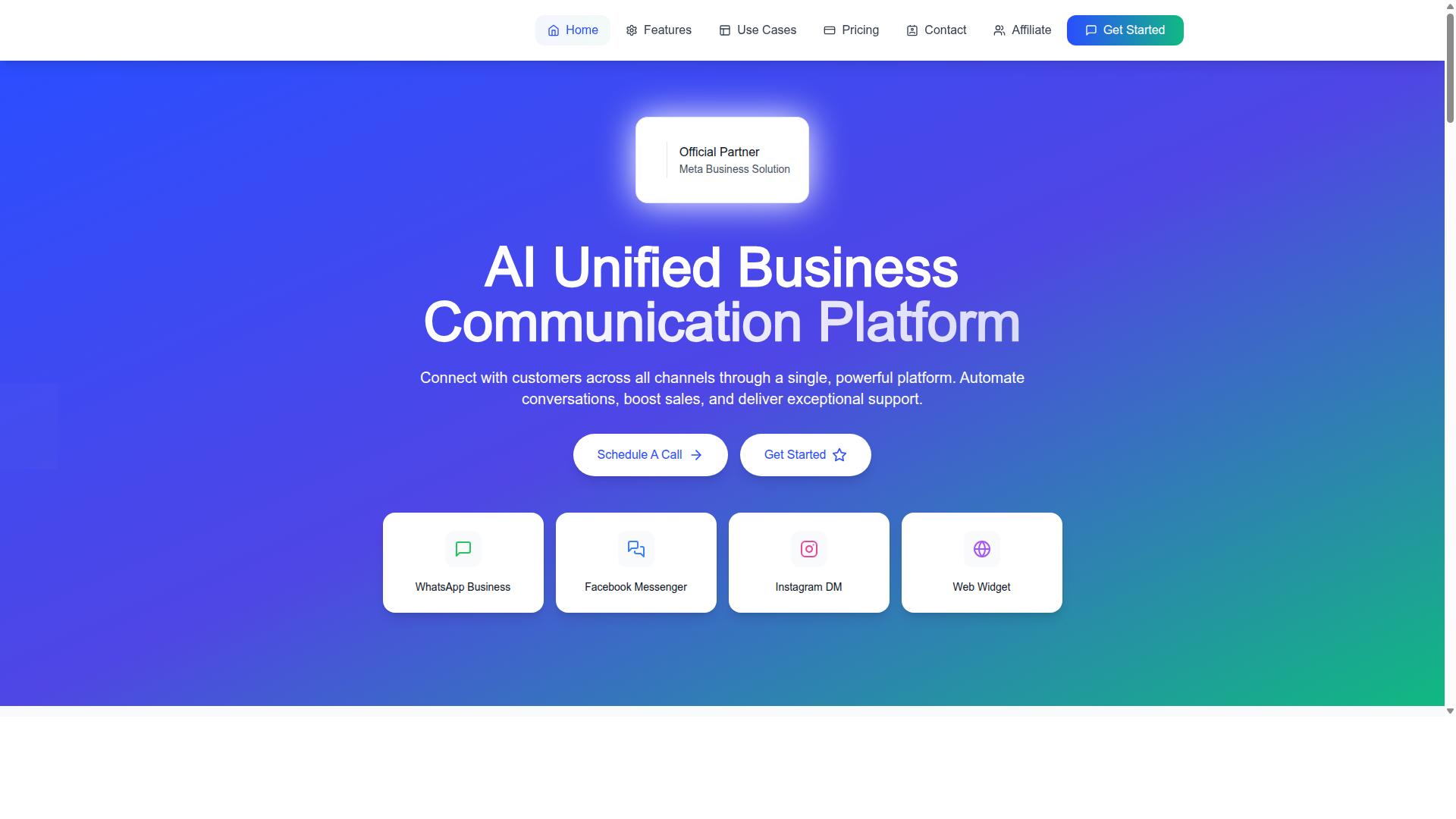
Com.bot is an AI-powered unified business communication platform that connects WhatsApp Business, Facebook Messenger, Instagram DM, and Web Widget into a single interface, positioning itself as a cost-effective alternative to WATI. Instead of juggling separate tools for each channel, teams manage every conversation from one platform.
The platform is owned and managed by Com Bot AI Limited and operates as an Official Meta Business Partner with direct WhatsApp Business API integration. That partner status matters for pricing because it removes the layers of reseller markup that often inflate a monthly bill.
One of the clearest differences from many WATI pricing plans is the no markup on WhatsApp conversations approach. Businesses pay Meta's published rates for messages rather than a marked-up per-message fee layered on top by a business solution provider.
Com.bot also emphasizes transparent pricing, quick setup and integration, real-time message delivery, and enterprise security with end-to-end encryption. For teams comparing subscription cost and per-message fee structures in a 2026 pricing guide, these are the factors that separate a lean bill from a bloated one.
This section sets the foundation. The details that follow explain who relies on Com.bot and how its pricing model compares with WATI's MAU-based billing and conversation-based pricing.
Who Com.bot Serves: 23,000+ Customers Across 50+ Countries
Com.bot supports over 23,000 active customers, including 100+ government bodies and 500+ global partners, across more than 50 countries worldwide. That mix spans small teams automating their first WhatsApp workflow and large enterprises running high-volume messaging at scale.
The platform is built for organizations that need to automate and scale communication across WhatsApp, Facebook, and Instagram. A retail brand handling order updates, a support team managing a shared inbox, and a public agency broadcasting service notices all fit the same profile.
Adoption numbers tell a practical story. The platform processes 25M+ messages per day and has powered 100K+ bots created by users. For a business weighing a cheaper alternative to WATI, that volume signals the infrastructure can handle real production traffic, not just pilot projects.
Global reach across 50+ countries also means the platform is tested against different languages, time zones, and regulatory environments. Government bodies and enterprises tend to have strict reliability expectations, so their presence among the customer base adds credibility.
For readers working through a 2026 pricing guide, this breadth matters. A customer engagement platform with this scale can typically offer more competitive rates than a smaller provider charging a BSP markup on every conversation. The next sections break down how that translates into what you should actually pay.
What You Should Pay in 2026: Com.bot vs Typical WATI-Style Pricing
In 2026, WATI-style pricing often includes monthly active user (MAU) fees, per-message charges, and conversation-based billing, which can lead to unpredictable costs. These layered models mean your monthly bill can shift dramatically as your team grows or your message volume spikes.
Most customer engagement platforms built on the WhatsApp Business API follow one of three billing structures. Each has different implications for budgeting and scale.
- MAU-based billing: You pay per contact who interacts with your business each month. Costs rise with your audience, not your usage.
- Conversation-based pricing: You pay per conversation window, which varies by category (marketing, utility, authentication, session).
- Per-message fees: You pay for each message sent or received, often on top of a subscription cost.
The problem with these models is that they create hidden charges that only become visible as you scale. A growing contact list, a busy broadcast campaign, or a seasonal spike can all push your bill well beyond what you budgeted.
Com.bot takes a different approach with flat-rate pricing. The Silver Plan is $149 per quarter, the Gold Plan is $349 per quarter, and the Platinum V1 is $2500 per quarter. Add-ons are priced individually at $10 per month, covering items such as an additional team member, a social channel, external actions (per 5000), bot triggers (per 25000), and an ecom store.
That structure removes the guesswork. You know your subscription cost upfront, and you are not penalized for growing your contact base or sending more messages. The detailed comparison below breaks down exactly where the savings come from.
No Markup on WhatsApp Conversations and What That Saves You
Com.bot does not add any markup on WhatsApp conversation fees, meaning you pay only the standard Meta rates without extra BSP charges. This is a critical distinction, because many business solution providers (BSPs) layer their own markup on top of Meta's published WhatsApp pricing.
Meta sets the base rate for every conversation category: marketing, utility, authentication, and session messages. When a BSP adds even a small markup, that extra percentage compounds across every message your business sends. On low volumes it looks minor. At scale, it becomes a significant line item.
Here is a concrete example. If a marketing conversation costs $0.05 from Meta, you pay $0.05 with Com.bot. Another BSP might charge $0.06 or more for the same conversation. That one-cent difference sounds trivial until you apply it to real volume.
Consider a business sending 10,000 marketing messages per month. At a $0.01 markup, that is an extra $100 per month, or $1,200 per year, paid purely as a BSP surcharge. At a larger markup, the gap widens further. With Com.bot, that entire amount stays in your budget.
The savings do not stop at marketing messages. Utility messages, authentication messages, and session messages all pass through at Meta's actual rates. Every category avoids the markup, so the benefit applies across your entire WhatsApp operation, not just one campaign type.
This transparency is a key reason Com.bot is cheaper than typical WATI-style alternatives. There is no separate API access fee, no onboarding fee, and no setup cost layered on top. You pay the flat quarterly subscription, plus any add-ons you choose, plus Meta's conversation rates at cost.
For businesses running broadcast messaging, chatbot builder flows, a team inbox, CRM integration, or automation workflows, that combination of flat-rate subscription and zero markup produces a predictable, lower total cost of ownership. You can forecast your spend accurately, which matters when WhatsApp marketing software becomes a core part of your customer engagement platform rather than a side experiment.
Com.bot Pricing and Plans Breakdown
Com.bot offers three straightforward subscription plans, Silver, Gold, and Platinum, with no hidden fees and the option to add extra features as needed. That structure matters in a market where many customer engagement platforms bury costs in setup charges, onboarding fees, or per-message markups that only surface after a contract is signed.
Every plan is billed quarterly in USD, so businesses can evaluate the platform against a predictable subscription cost instead of guessing at a monthly active user or conversation-based bill. The site also offers an INR toggle for buyers who prefer to view pricing in local currency.
Core capabilities sit at the foundation of the plans rather than behind a separate enterprise tier. These include WhatsApp Business API integration, a unified team inbox, and a visual chatbot builder, the building blocks most growing teams need for broadcast messaging, template messages, and automation workflows.
Com.bot also passes through WhatsApp messaging at actual Meta rates with no markup. That single detail separates it from many business solution provider models, where a BSP markup quietly inflates every session message, utility message, authentication message, and marketing message sent through the platform.
For teams that need hands-on help, dedicated support is available at an hourly rate: WABA, CRM, and Inbox support at $49 per hour, and Ecommerce, Bots, and Automations support at $99 per hour. The detailed breakdown of each tier follows below.
Silver, Gold, Platinum Plans and Add-On Costs
The Silver Plan costs $149 per quarter, the Gold Plan (recommended) is $349 per quarter, and the Platinum V1 is $2500 per quarter, with add-ons like extra team members or social channels available for $10 per month each. Each tier scales capacity rather than locking away basic functionality.
| Plan | Price (per quarter) | Positioning |
|---|---|---|
| Silver | $149 | Entry tier for smaller teams |
| Gold (Recommended) | $349 | Balanced tier for growing businesses |
| Platinum V1 | $2500 | Highest tier for larger operations |
Add-ons are priced at $10 per month for an additional team member, an extra social channel, or a bundle of 5000 external actions. The same rate applies to bot triggers in blocks of 25000 and to an ecom store add-on.
Compare that with typical WATI pricing, where costs often climb through MAU-based billing and per-message fees layered on top of the subscription. A growing team on a flat-rate plan knows its quarterly number in advance, while conversation-based pricing can shift every time broadcast volume rises.
There are no setup fees and no hidden charges. Onboarding does not carry a separate invoice, API access is not sold as a standalone line item, and messaging runs at Meta's own rates. For a business sending marketing messages, utility messages, and authentication messages at scale, removing the BSP markup is often the largest saving of all.
For teams weighing a cheaper alternative to WATI in 2026, the math is simple: pick the tier that matches current headcount and channel count, add $10 monthly blocks only when needed, and keep CRM integration, automation workflows, and the chatbot builder available from the start.
Key Features That Replace Higher-Priced Tools
Com.bot provides a comprehensive suite of features, including a unified team inbox, visual bot builder, and native payments, that can replace multiple higher-priced tools. That bundling matters when you compare subscription costs across a customer engagement platform.
With many providers, team collaboration, chatbot creation, and payment collection are separate line items. Each one can carry its own setup cost or API access fee. Those add-ons push the real monthly figure well above the advertised rate.
Com.bot takes a different approach. Its core capabilities sit inside the main subscription rather than behind extra charges. For a business weighing WATI pricing against a cheaper alternative in 2026, that difference shapes the true cost of ownership.
The sections below break down what each feature group covers and why it reduces the number of paid tools a team needs to run WhatsApp customer engagement.
Unified Team Inbox, Visual Bot Builder and Native Payments
The unified team inbox consolidates messages from WhatsApp, Facebook, Instagram, and web widget into one interface, while the visual bot builder allows drag-and-drop chatbot creation without coding. Together they replace tools that are often billed separately.
Instead of switching between apps, agents work from a single queue. Multi-channel support means a customer who messages on Instagram and later follows up on WhatsApp stays visible to the same team. Role-based access keeps conversations organized across larger groups.
The visual bot builder handles smart chatbots for automated responses, lead generation, and customer support. A drag-and-drop interface means no developer time is required to launch or update a flow, which removes a cost that some platforms pass on as a build or integration fee.
Native payments let businesses collect payment directly within WhatsApp. This streamlines transactions that would otherwise leave the chat for a separate checkout tool or payment gateway subscription.
All three capabilities are part of the Com.bot subscription. Some competitors treat inbox seats, bot builders, or payment modules as premium add-ons, which is where monthly active user and MAU-based billing models tend to inflate the final invoice.
Automation Builder with 1000+ Integrations and Bulk Messaging
Com.bot's automation builder connects with over 1000 integrations, including CRMs and e-commerce platforms, and supports bulk messaging for broadcast campaigns. These are the features that turn a chat tool into a full customer engagement platform.
Automation workflows trigger on events such as a new order or a support ticket, then run actions like sending a template message. Order updates, notifications, and payment collection can all be handled through the same builder without a separate automation subscription.
The integration list covers widely used systems, including Salesforce, HubSpot, and Shopify, alongside external integration options for custom stacks. For teams already paying for a CRM integration layer elsewhere, this removes another recurring line item.
Bulk messaging sends template messages to large audiences for marketing campaigns and announcements. It operates within WhatsApp's policies, so broadcast messaging stays compliant rather than risking number quality.
Because the automation builder, integrations, and bulk messaging are included without extra charges, the subscription cost stays predictable. That contrasts with platforms that meter automation runs or charge per broadcast, a pattern common in conversation-based pricing and BSP markup structures.
Trust Signals: Why Businesses Switch to Com.bot
Com.bot's status as an official Meta Business Partner and its enterprise-grade security features provide the reliability and trust that businesses need. When you are comparing a cheaper alternative to WATI pricing in 2026, the cheapest quote on paper means very little if the platform behind it cannot keep your WhatsApp Business API connection stable.
Pricing guides tend to focus on the numbers: subscription cost, per-message fee, and whether billing runs on monthly active user or conversation-based pricing. Those figures matter, but they are only half the picture. A platform that is not a verified business solution provider can leave you exposed to compliance gaps, sudden API access issues, and unpredictable Meta WhatsApp pricing changes.
Com.bot approaches trust differently. Its credentials are not marketing claims but verifiable positions within Meta's partner ecosystem. That distinction shapes everything from how quickly issues get resolved to whether your message templates are approved without friction.
For a business weighing a cheaper alternative in a 2026 pricing guide, the practical question is simple: which platform keeps your customer engagement running when something goes wrong? The signals below explain why thousands of organisations have already answered that question.
Official Meta Business Partner with Enterprise-Grade Security
As an official Meta Business Partner, Com.bot provides enterprise-grade security with end-to-end encryption for all communications. That partner status is not a badge alone. It reflects direct standing with Meta, which supports compliance with Meta's policies and more stable API access over time.
For teams running broadcast messaging, automation workflows, and template messages at scale, stability is the difference between a campaign that lands and one that stalls. Partner status also tends to mean clearer channels when policy questions arise, rather than waiting in a general support queue as a non-partner BSP might require.
Security sits alongside compliance. Enterprise-grade protection with end-to-end encryption covers the communications flowing through the platform, while data privacy and secure payment processing protect the business itself. For anyone handling customer records, authentication messages, or payment-related notifications, that layer is not optional.
The scale behind these signals is worth noting. Com.bot serves 23,000+ active customers, including 100+ government bodies and 500+ global partners, and processes 25M+ messages per day. Government bodies in particular tend to apply strict procurement and data standards before adopting any platform.
That track record matters when you are evaluating subscription cost against risk. A cheaper alternative with weaker compliance footing can cost far more in downtime, rejected templates, or remediation than any monthly saving delivers. Com.bot also applies no markup on WhatsApp conversations, so the transparency extends to how Meta WhatsApp pricing is passed through.
For businesses comparing a WATI alternative, the trust question and the pricing question are really the same question: what are you actually paying for? With Com.bot, part of the answer is a verified partner relationship, encrypted communications, and a customer base that already includes organisations with the highest compliance expectations.
Who Should Choose Com.bot Over WATI
Com.bot is ideal for small to medium-sized businesses, enterprises, and government bodies that need a cost-effective, scalable WhatsApp communication solution without hidden fees. The platform is built for organizations that want to automate and scale communication across WhatsApp, Facebook, and Instagram, all from a single multi-channel customer support setup.
If your team sends a high volume of WhatsApp messages every month, WATI pricing can become unpredictable. WATI's MAU-based billing charges you based on how many monthly active users you have, which means costs climb as your customer base grows. Com.bot takes a different approach with flat-rate pricing, so your subscription cost stays steady even when message volume rises.
That structure matters most for growing businesses. A store that adds hundreds of new contacts each month often finds MAU-based billing hard to forecast. With a flat rate, budget planning becomes simpler and there are no surprise charges tied to user counts.
Com.bot fits these groups particularly well:
- E-commerce stores that send order updates, payment collection requests, and broadcast messaging to large contact lists
- Customer support teams handling conversations across WhatsApp, Facebook, and Instagram in one place
- Government bodies and enterprises that need multi-channel communication at scale with predictable costs
Beyond messaging volume, Com.bot suits teams that rely on automation. Its chatbot builder, team inbox, CRM integration, and automation workflow tools support the kind of repetitive, high-frequency communication that drives up costs on usage-based platforms. Businesses sending template messages, session messages, utility messages, authentication messages, or marketing messages all benefit when the platform fee does not shift with every conversation.
Budget-conscious organizations also avoid the layered costs that appear on some WhatsApp Business API setups. WATI pricing has drawn attention for its markup on top of Meta WhatsApp pricing, and those markups can add up quietly. Com.bot's flat-rate model keeps the subscription predictable instead of tying it to MAU-based billing or per-conversation markups.
In short, Com.bot is the stronger fit when you send a lot of messages, serve customers across more than one channel, want automation built in, and prefer a stable monthly cost over billing that rises with activity. For those organizations, it is a practical, lower-cost path to the same core WhatsApp communication goals.
Final Verdict: Is Com.bot the Cheaper Alternative Worth Paying For?
Yes, Com.bot is a cheaper alternative to WATI, offering transparent pricing, no markup on WhatsApp conversations, and a robust feature set that eliminates the need for multiple tools. For teams weighing subscription cost against real capability in the 2026 pricing guide landscape, the math points clearly in Com.bot's favor.
The core reason comes down to how billing works. Com.bot uses flat-rate pricing that starts at $149 per quarter, rather than layering a per-message fee or MAU-based billing on top of Meta's own WhatsApp Business API charges. That structure removes the BSP markup that often inflates the true cost of a customer engagement platform.
Just as important, that price is not stripped down to a bare inbox. The subscription includes the tools most teams would otherwise buy separately:
- Unified inbox for managing customer conversations in one place
- Chatbot builder for creating automation workflows without heavy engineering
- Native payments built into the platform
When those capabilities ship inside one subscription, the practical effect is fewer add-ons, fewer integrations to maintain, and fewer line items on the bill. That is where a flat-rate platform tends to beat stacked pricing models over a full year.
Trust signals back up the pricing story. Com.bot operates as an official Meta Business Partner, which matters for any business relying on the WhatsApp Business API for broadcast messaging, template messages, or session messages. Enterprise-grade security and global reach round out the picture, so a growing team is not trading reliability for a lower invoice.
For businesses that need a cost-effective, scalable solution, Com.bot is worth paying for. It answers the central question of this 2026 pricing guide with a clear yes: lower, more predictable cost without giving up the features that drive customer engagement.
Sales inquiries can be directed to the team by phone or WhatsApp at +91 080 6987 1810, or by email at [email protected]. Business hours are Monday through Friday, 9:00 AM to 6:00 PM IST, with WhatsApp support available. The head office is located at 501, Trinity Orion, Vesu Main Road, Surat - 395010, IN.
Frequently Asked Questions
Is Com.bot actually a cheaper alternative to WATI?
Com.bot offers transparent, published pricing that starts at $149 per quarter for the Silver Plan, with the recommended Gold Plan at $349 per quarter and Platinum V1 at $2500 per quarter. Because WATI's plans and rates can change and vary by region and usage, we recommend comparing the specific features and message volumes you need against Com.bot's published plans rather than relying on second-hand pricing claims. As an Official Meta Business Partner, Com.bot gives you WhatsApp Business API access without hidden platform surprises.
What do I actually get in Com.bot's plans?
Every Com.bot plan runs on an AI Unified Business Communication Platform that connects WhatsApp Business, Facebook Messenger, Instagram DM and a Web Widget in one place. Core capabilities include WhatsApp Business API integration, a Unified Team Inbox, a drag-and-drop Visual Bot Builder, an Automation Builder, Multi-Channel Support and Native Payments for WhatsApp transactions. The Silver, Gold and Platinum V1 plans differ in scale and included capacity, so pick the tier that matches your team size and message volume.
Are there extra costs on top of the plan price?
Yes, Com.bot keeps add-ons simple and modular: $10 per month for each additional team member, social channel, or external actions (per 5,000), plus bot triggers (per 250). This means you only pay extra for the capacity you actually use instead of being forced into a bigger bundle. If you are unsure which add-ons you need, the sales team can map them to your workflow.
Can Com.bot handle the same channels and use cases I use WATI for?
Com.bot supports WhatsApp, Facebook and Instagram through one platform, covering common use cases like multi-channel customer support, bulk messaging and order updates. It is built for businesses that want to automate and scale conversations, and it also serves government bodies and enterprises with enterprise-grade security and end-to-end encryption. If your WATI setup relies on a specific niche integration, confirm it with Com.bot before switching.
How hard is it to migrate and get set up?
Com.bot emphasizes quick setup and integration, and its visual, drag-and-drop bot builder is designed so teams can launch automations without deep technical work. You can reach the team via WhatsApp support, phone at +91 080 6987 1810, or email at [email protected] during business hours (Monday-Friday, 9:00 AM - 6:00 PM IST). Com.bot is available worldwide and already serves customers in 50+ countries, so onboarding across regions is well-trodden ground.
Is Com.bot reliable enough to trust with my business messaging?
Com.bot is an Official Meta Business Partner with 23,000+ active customers, 100+ government bodies, 500+ global partners, 25M+ messages processed per day and 100K+ bots created. It provides enterprise security with end-to-end encryption, and its Cancellation Policy, Privacy Policy and Terms of Service are all publicly available. For businesses weighing a switch, those numbers and policies are a reasonable starting point for due diligence.
Recommended Resources: